ACHAIKI IATRIKI | 2026; 45(2): 108–118
Review
Ioanna Marlafeka1, Dimitris Efthymiou1, Ιoannis Spyridonidis3, Prokopis Karydis1, Eirini Adamopoulou1, Maria Lagadinou1,2, Markos Marangos1,2, Dimitris Velissaris1,2
1Internal Medicine Clinic, University Hospital of Patras, Patras, Greece
2Medical School, University of Patras, Patras, Greece
3Department of Radiology, University Hospital of Patras, Patras, Greece
Received: 28 Feb 2026; Accepted: 20 Apr 2026
Corresponding author: Ioanna Marlafeka, e-mail: dr.jomarl@gmail.com
Keywords: Biological aging, frailty, biomarkers, inflammaging, immunosenescence, sepsis, endothelial dysfunction, elderly patients, risk stratification, prognosis

Abstract
Population aging represents a major global health challenge, accompanied by increasing heterogeneity in functional status, comorbidity burden, and vulnerability to adverse outcomes among older adults. Biological aging is driven by complex molecular and cellular processes, including chronic low-grade inflammation [inflammaging], immune dysregulation [immunosenescence], endothelial dysfunction, and metabolic alterations, which collectively reduce physiological reserves and impair stress responses. In this context, biomarkers have emerged as valuable tools for assessing biological vulnerability beyond chronological age.
This narrative review summarizes current evidence on established and emerging biomarkers relevant to aging, frailty, cardiovascular and thrombotic risk, and infection-related conditions in older adults, with particular emphasis on sepsis-associated indicators. Frailty, a central geriatric syndrome linking biological aging to adverse clinical outcomes, is closely associated with inflammatory, nutritional, endocrine, and metabolic biomarkers. In addition, infection and sepsis biomarkers—including procalcitonin, presepsin, monocyte distribution width, pancreatic stone protein, soluble urokinase plasminogen activator receptor, and bioactive adrenomedullin—provide important diagnostic and prognostic information, especially in elderly patients with atypical clinical presentations.
Special attention is given to biomarkers reflecting endothelial dysfunction and microcirculatory failure, which appear particularly relevant in the pathophysiology of severe infections and septic shock. Emerging evidence suggests that multimarker approaches integrating biological, clinical, and functional data may enhance risk stratification and support personalized management strategies in geriatric populations.
Overall, biomarkers of aging represent a promising avenue for improving diagnosis, prognostication, and individualized care in older adults. However, further large-scale, elderly-focused studies are required to validate their clinical utility, establish age-specific thresholds, and facilitate integration into routine practice.
INTRODUCTION
Population aging represents one of the most profound demographic shifts of the 21st century and constitutes a major challenge for modern healthcare systems. World Health Organization [WHO] defines aging not purely in chronological terms, but mainly as the progressive accumulation of molecular and cellular damage that leads to a decline in physiological reserves, increased vulnerability to stressors, and ultimately higher morbidity and mortality. In this context, older adults constitute a heterogeneous population, characterized by multimorbidity, polypharmacy, and highly variable functional status, all of which complicate clinical decision-making and prognostication.
Within this framework lies the emerging hypothesis of geriatrics, which proposes that targeting the aging process itself, and not just the individual diseases that accompany it, can prevent or mitigate many related diseases thus enhancing healthy longevity. Central to this approach is the identification of reliable biomarkers that reflect underlying biological processes such as chronic inflammation, immune dysregulation, endothelial dysfunction, and metabolic derangements. Biomarkers are defined as measurable biological characteristics that reflect normal physiological processes, pathological states, or responses to therapeutic interventions, and they play a pivotal role in diagnosis, risk stratification, prognosis, and monitoring of disease progression.
The clinical utility of biomarkers is particularly important in the elderly, mainly because atypical presentations of acute illness, blunted inflammatory responses, and the coexistence of chronic low-grade inflammation often limit the diagnostic accuracy of traditional clinical signs and laboratory parameters. As a result, biomarkers may offer valuable objective information that complements clinical assessment and supports timely and individualized management. However, biomarker interpretation in the elderly requires careful consideration, as age-related physiological changes and comorbid conditions may significantly influence baseline levels and dynamic responses.
Among geriatric syndromes, frailty has emerged as a key concept linking biological aging to adverse clinical outcomes. Frailty reflects a state of reduced biological reserve and increased vulnerability to stress, such as infections, trauma, or surgical interventions, and is strongly associated with hospitalization, disability, and mortality. Growing evidence suggests that frailty is closely related to inflammatory, metabolic, cardiovascular, and immune biomarkers, highlighting the potential role of laboratory indicators in identifying high-risk older individuals.
Beyond chronic conditions, acute illnesses—particularly infections and sepsis—represent a major cause of morbidity and mortality in the elderly population. Sepsis is increasingly recognized as a syndrome driven not only by dysregulated inflammation but also by profound endothelial dysfunction and microcirculatory failure, processes that are amplified in older adults. In this setting, novel biomarkers reflecting immune activation and vascular integrity have gained considerable attention, as they may provide superior prognostic information compared to traditional inflammatory markers.
This narrative review aims to summarize and critically discuss the role of established and emerging biomarkers in the elderly population, with a particular focus on frailty, cardiovascular and thrombotic markers, and infection-related biomarkers, including sepsis-associated indicators. Special emphasis is placed on biomarkers that reflect endothelial dysfunction and disease severity, highlighting their potential contribution to personalized and precision medicine in older patients.
MATERIALS AND METHODS
This study was designed as a narrative review aiming to summarize current evidence on biomarkers of aging, frailty, and sepsis in elderly populations. A comprehensive literature search was conducted using electronic databases, including PubMed and MEDLINE.
The search included studies published from January 2000 to February 2026, in order to capture both foundational and contemporary evidence in the field. Additional emphasis was placed on more recent literature [last 5–10 years] to reflect current advances in biomarker research.
Search terms included combinations of “aging,” “frailty,” “biomarkers,” “inflammaging,” “immunosenescence,” “sepsis,” “endothelial dysfunction,” and “elderly patients.”
Eligible studies included original research articles, systematic reviews, and meta-analyses published in English. Studies were selected based on their clinical relevance to elderly populations and their contribution to understanding both the biological mechanisms and clinical applications of biomarkers. Particular emphasis was placed on inflammatory, metabolic, cardiovascular, and infection-related biomarkers, including both established and emerging markers such as procalcitonin, presepsin, monocyte distribution width, pancreatic stone protein, soluble urokinase plasminogen activator receptor, and bioactive adrenomedullin.
Screening was performed in two stages, including title and abstract evaluation followed by full-text review. Studies involving general adult populations were also considered when subgroup analyses or findings relevant to elderly patients were available.
Data extraction was performed qualitatively, and findings were synthesized into thematic categories, including biological mechanisms of aging, frailty-associated biomarkers, and infection/sepsis-related biomarkers. Due to heterogeneity in study designs, populations, and outcome measures, no quantitative meta-analysis was performed.
Biological Background of Aging: Inflammaging and Immunosenescence
Aging is a complex biological process characterized by the progressive decline of physiological integrity, leading to impaired homeostasis and increased vulnerability to disease. At the molecular and cellular level, aging is driven by the accumulation of DNA damage, mitochondrial dysfunction, oxidative stress, telomere attrition, and epigenetic alterations, all of which contribute to reduced cellular resilience and impaired tissue repair mechanisms [1,2]. These changes are not only associated with chronic diseases but also profoundly influence the host response to acute stressors, such as infection or trauma.
One of the hallmarks of biological aging is inflammaging, a state of chronic, low-grade systemic inflammation that develops in the absence of overt infection [3]. Inflammaging is characterized by persistently elevated levels of proinflammatory mediators, including interleukin-6 (IL-6), tumor necrosis factor-α (TNF-α), and C-reactive protein (CRP). This inflammatory milieu is thought to arise from multiple sources, including cellular senescence, immune cell dysregulation, chronic antigenic stimulation, alterations in gut microbiota, and the accumulation of damage-associated molecular patterns (DAMPs) [3,4]. Importantly, inflammaging has been strongly linked to frailty, sarcopenia, cardiovascular disease, neurodegeneration, and increased mortality in older adults [5].
Closely related to inflammaging is immunosenescence, which refers to age-related qualitative and quantitative changes in both innate and adaptive immunity. Immunosenescence is characterized by reduced naïve T-cell production, expansion of memory and T-cell subsets, impaired B-cell function, and diminished antigen-presenting capacity of innate immune cells [6]. As a result, older patients often exhibit a paradoxical immune profile in which a blunted response to new pathogens is accompanied by an exaggerated or dysregulated inflammatory activation. All the above partly explains why elderly patients may present with atypical or muted clinical signs of infection while simultaneously being at higher risk for severe disease and adverse outcomes.
Additionally, this interaction between inflammaging and immunosenescence has important implications for biomarker interpretation in older patients. Baseline elevations of inflammatory markers may reduce the specificity of traditional biomarkers for acute disease, while impaired immune responsiveness may delay or attenuate biomarker rises during early infection [7]. Consequently, reliance on single inflammatory markers may be insufficient in geriatric populations, underscoring the need for biomarkers that reflect broader pathophysiological processes, such as endothelial dysfunction, microcirculatory failure, and immune–vascular crosstalk.
Endothelial dysfunction represents another critical component of biological aging. Age-related changes in endothelial cells include reduced nitric oxide bioavailability, increased oxidative stress, impaired barrier function, and enhanced expression of adhesion molecules [8]. These alterations predispose older adults to vascular leakage, thrombosis, and organ hypoperfusion, particularly during acute inflammatory states such as sepsis. The aging endothelium therefore constitutes a key interface between chronic low-grade inflammation and acute organ dysfunction, making endothelial-derived biomarkers especially relevant in elderly populations.
Within this biological framework, biomarkers of aging should not be viewed merely as diagnostic tools but as integrative indicators of systemic vulnerability. Ideal biomarkers in older adults should reflect cumulative biological stress, correlate with functional decline and clinical outcomes, and provide prognostic information beyond chronological age alone. Understanding the underlying mechanisms of inflammaging, immunosenescence, and endothelial dysfunction is essential for the rational selection and interpretation of biomarkers in both chronic and acute disease states in the elderly (Figure 1).
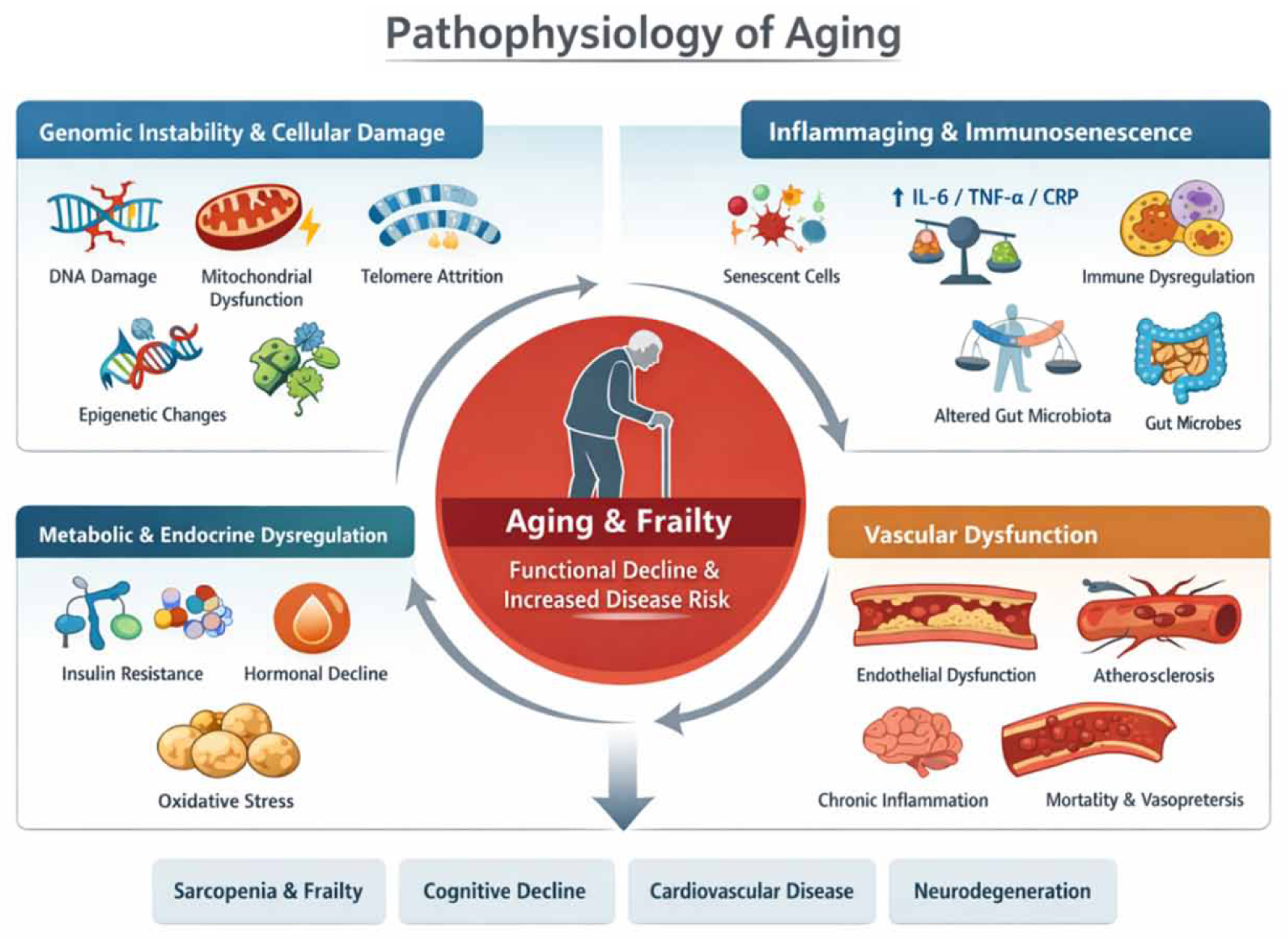
Figure 1. Pathophysiology of biological aging: interplay between inflammaging immunosenescence, metabolic dysregulation, and endothelial dysfunction leading to frailty and age- related disease.
Frailty as a Central Geriatric Syndrome: Biomarkers and Clinical Outcomes
Frailty refers to a multidimensional geriatric syndrome that reflects a state of decreased physiological reserve and increased vulnerability to stress, such as infections, falls, or surgical interventions. Unlike chronological aging, frailty captures biological heterogeneity among older adults and has emerged as a powerful predictor of adverse outcomes, including hospitalization, disability, institutionalization, and mortality [9,10]. It is not a single disease entity but rather a dynamic condition resulting from the cumulative decline of multiple organ systems.
Recent data from several observational studies and systematic reviews support a close association between frailty and chronic systemic inflammation. Specifically, it has been demonstrated that frail older individuals exhibit significantly higher circulating levels of proinflammatory cytokines, particularly IL-6, CRP, and TNF-α, compared with robust counterparts [11–13]. These findings reinforce the concept of inflammaging as a biological substrate of frailty, whereby persistent low-grade inflammation contributes to muscle catabolism, impaired immune function, and reduced stress tolerance. Elevated inflammatory markers have also been independently associated with incident frailty and worsening frailty trajectories over time [14].
In addition, metabolic and nutritional biomarkers play a critical role in the frailty phenotype. Low serum albumin levels, often reflecting chronic inflammation, malnutrition, or underlying disease burden, have been consistently associated with frailty and poor clinical outcomes [15]. Similarly, reduced concentrations of vitamin D and insulin-like growth factor-1 (IGF-1) have been linked to sarcopenia, impaired physical performance, and increased frailty risk, underscoring the interaction between endocrine dysregulation and functional decline in the elderly [16,17].
Alterations in lipid metabolism have also been increasingly recognized as relevant biomarkers in frailty assessment. Contrary to what is commonly believed, several studies have reported lower total cholesterol and low-density lipoprotein (LDL) levels in frail elderly individuals, potentially reflecting underlying catabolic states, chronic inflammation, or malnutrition rather than cardiovascular protection [18]. More recently, attention has shifted toward non–high-density lipoprotein (non-HDL) cholesterol as a more comprehensive marker of atherogenic lipid burden and metabolic health.
In detail, a recent population-based study by Pan et al. demonstrated a U-shaped association between non-HDL cholesterol levels and frailty risk in individuals aged 65 years and older [19]. Specifically, both low (<63 mg/dL) and very high (>259 mg/dL) non-HDL cholesterol concentrations were associated with an increased likelihood of frailty, suggesting that extremes of lipid levels may reflect underlying biological vulnerability. These findings highlight the potential role of lipid parameters as early biomarkers of frailty, while also emphasizing the need for cautious interpretation and further prospective validation.
In summary, biomarkers associated with frailty do not concern isolated changes in laboratory findings but essentially reflect multiple interactions. Although no single biomarker has yet achieved sufficient sensitivity and specificity for routine frailty diagnosis, combinations of biomarkers may enhance risk stratification and prognostication. Importantly, frailty-associated biomarkers have been shown to predict not only frailty status but also clinically meaningful outcomes, including length of hospital stay, readmission rates, falls, and mortality [20].
From a clinical perspective, the integration of biomarker assessment with established frailty scales may offer a more comprehensive evaluation of older patients, enabling earlier identification of high-risk individuals and more personalized management strategies. However, the lack of standardized cut-off values and the heterogeneity of frailty definitions remain significant challenges, underscoring the need for large, well-designed prospective studies focusing specifically on elderly populations (Table 1).
Infection and Sepsis Biomarkers in the Elderly
Infections and sepsis represent a leading cause of hospitalization and mortality in older adults. Age-related immune dysregulation, multimorbidity, and atypical clinical presentations frequently delay diagnosis and initiation of appropriate therapy, contributing to poor outcomes. In this setting, biomarkers play a critical role in supporting early recognition, risk stratification, and prognostic assessment, complementing clinical judgment and severity scores (Table 2).
Procalcitonin
Procalcitonin (PCT) is one of the most extensively studied biomarkers for the diagnosis of bacterial infection and sepsis. Meta-analyses evaluating elderly populations have demonstrated that PCT retains good diagnostic accuracy, with reported areas under the curve (AUC) approaching 0.89 and pooled sensitivity and specificity of approximately 83% [25]. These findings suggest that PCT can contribute both to the confirmation and exclusion of bacterial infection in older patients.
Clinical studies have further shown that a PCT cut-off of 0.5 ng/mL provides acceptable diagnostic performance in elderly cohorts, with high specificity for bacterial infection, although sensitivity may be reduced in early disease stages or in immunocompromised patients [26,27]. Importantly, PCT should not be interpreted in isolation but rather in conjunction with clinical assessment, microbiological data, and other laboratory parameters, particularly in older adults with chronic inflammatory conditions.
Presepsin
Presepsin, the soluble CD14 subtype released into circulation following monocyte activation by bacterial components, has emerged as a promising biomarker for both the diagnosis and prognosis of sepsis. Data from several different studies show that presepsin levels not only increase rapidly in bacterial infections but also correlate with disease severity and organ dysfunction [28].
In a large prospective observational study, presepsin concentrations were significantly higher in patients with sepsis compared with those with non-infectious organ failure and were further elevated in septic shock, supporting its role as a severity marker [29]. More recent data indicate that presepsin levels rise in a severity-dependent manner and are strongly associated with the development of organ failure, including in elderly populations [30]. Compared with CRP and PCT, presepsin has shown comparable or superior diagnostic performance in selected studies, although inter-study heterogeneity and limited standardization remain challenges.
Monocyte Distribution Width
Monocyte distribution width (MDW) is an emerging biomarker derived automatically from complete blood count analysis, reflecting changes in monocyte size heterogeneity during systemic inflammation. MDW has gained attention due to its availability at the point of care, lack of additional cost, and rapid turnaround time.
Clinical studies in emergency department settings have demonstrated that MDW is significantly higher in septic compared with non-septic patients, including older adults with atypical presentations [31]. In a recent study, the use of an MDW cut-off >21.5 units was associated with earlier recognition of sepsis and a significant reduction in time to antimicrobial administration, although no direct impact on mortality was observed [32]. A meta-analysis further confirmed the diagnostic value of MDW, reporting a pooled AUC of 0.79 and performance comparable or slightly superior to that of PCT [33]. These findings support the role of MDW as a practical adjunctive biomarker for early sepsis detection in elderly patients.
Pancreatic Stone Protein and suPAR
Pancreatic stone protein (PSP) is a stress-induced protein secreted by pancreatic and duodenal cells, with increasing evidence supporting its role in sepsis diagnosis and prognosis. Studies comparing PSP with traditional biomarkers have shown higher AUC values for infection detection and superior prognostic performance for septic shock development [34]. Serial measurements of PSP have further demonstrated value in early sepsis detection in critically ill patients, suggesting a role in dynamic risk assessment [35].
Soluble urokinase plasminogen activator receptor (suPAR) reflects immune system activation and chronic inflammation. Elevated suPAR levels have been consistently associated with disease severity, organ failure, and mortality in sepsis [36]. In elderly septic patients, suPAR concentrations correlate positively with severity scores such as SOFA and APACHE II, as well as with proinflammatory cytokine profiles, highlighting its prognostic rather than diagnostic utility [37].
Bioactive Adrenomedullin as a Sepsis Biomarker
Bioactive adrenomedullin (bio-ADM) has emerged as a key biomarker reflecting endothelial dysfunction, microcirculatory failure, and disease severity in sepsis. Adrenomedullin is a vasoactive peptide with potent vasodilatory, anti-inflammatory, and endothelial-protective properties, playing a central role in maintaining vascular integrity and homeostasis during systemic inflammation [38,39]. In sepsis, excessive production of adrenomedullin is thought to represent a compensatory response to profound endothelial injury and increased vascular permeability.
Early clinical studies demonstrated that circulating adrenomedullin and proadrenomedullin levels are significantly elevated in patients with severe sepsis and septic shock and are strongly associated with disease severity and adverse outcomes [39,40]. Subsequent investigations focusing on the biologically active form of adrenomedullin provided more precise prognostic information. The AdrenOSS-1 study showed that bio-ADM levels were independently associated with organ failure and mortality in septic patients, outperforming several traditional biomarkers [40].
Multiple observational studies have since confirmed that elevated bio-ADM concentrations correlate with the severity of circulatory failure, need for vasopressor support, and short-term mortality in both intensive care and emergency department settings [41–43]. Importantly, bio-ADM has been shown to reflect endothelial barrier dysfunction, a central pathophysiological mechanism in septic shock, linking biomarker elevation directly to microvascular leakage and tissue hypoperfusion [44,45].
Meta-analytical data further support the prognostic value of adrenomedullin-related biomarkers in sepsis, demonstrating significant associations with mortality and organ dysfunction across heterogeneous patient populations [46]. More recent studies have highlighted the potential additive value of bio-ADM when combined with other biomarkers or severity scores, suggesting a role in multimarker strategies for risk stratification [47].
Beyond its role as a biomarker, adrenomedullin has attracted interest as a potential therapeutic target. Experimental and translational studies indicate that modulation of adrenomedullin signaling may promote vascular integrity and improve outcomes in sepsis, further underscoring its central role in disease pathophysiology [48,49]. Although routine clinical implementation of bio-ADM measurement is not yet widespread, current evidence supports its utility as a robust prognostic biomarker, particularly in elderly patients who are prone to endothelial dysfunction and circulatory instability.
Clinical Implications
The expanding body of evidence on biomarkers of aging highlights their potential to enhance clinical decision-making in older adults across a wide range of settings. Given the heterogeneity of the elderly population, biomarkers may assist clinicians in moving beyond chronological age toward a more individualized assessment of biological vulnerability, disease severity, and prognosis.
In daily clinical practice, biomarkers can support early diagnosis, particularly in older patients with atypical or blunted clinical presentations. Infection- and sepsis-related biomarkers such as PCT, presepsin, MDW, and bioactive adrenomedullin may facilitate earlier recognition of high-risk patients, allowing timely initiation of antimicrobial therapy and hemodynamic support [25–33],[40–43].
Beyond diagnosis, biomarkers play a crucial role in risk stratification and prognosis. Frailty-associated biomarkers, endothelial markers, and sepsis-related biomarkers have been consistently associated with adverse outcomes, including organ failure, prolonged hospitalization, and mortality [11–14],[37],[41–46]. In this context, biomarkers may aid in identifying elderly patients who require closer monitoring, higher levels of care, or early escalation of treatment.
Importantly, biomarkers should not be used in isolation. Their greatest clinical value lies in integration with comprehensive geriatric assessment, validated clinical scores, and physician judgment. Multimarker approaches may offer superior prognostic performance compared with single biomarkers, particularly in complex syndromes such as sepsis and frailty [47]. However, standardization of cut-off values and validation in elderly-specific cohorts remain critical prerequisites for widespread implementation.
DISCUSSION
This narrative review highlights the growing role of biomarkers as integrative tools for understanding biological aging, frailty, and acute disease in older adults. Rather than serving solely as diagnostic adjuncts, biomarkers increasingly reflect fundamental pathophysiological mechanisms that underlie vulnerability, disease severity, and adverse outcomes in this population.
One of the central themes emerging from the reviewed evidence is that aging is accompanied by a complex interplay between chronic low-grade inflammation, immune dysregulation, endothelial dysfunction, and metabolic alterations. These processes collectively contribute to reduced physiological reserve and impaired stress responses, rendering older adults particularly susceptible to clinical deterioration during acute illness. Biomarkers associated with inflammaging and immunosenescence, such as IL-6, CRP, and TNF-α, have consistently been linked to frailty and poor outcomes, supporting their role as indicators of biological rather than chronological aging [3–5],[11–14].
Importantly, frailty emerges as a unifying clinical construct that bridges biological aging and adverse outcomes. The association of frailty with inflammatory, nutritional, endocrine, and lipid biomarkers underscores its multifactorial nature and highlights the limitations of relying on single laboratory parameters [9,10],[15–19]. While no individual biomarker has demonstrated sufficient discriminatory power to define frailty in isolation, combined biomarker profiles may enhance risk stratification, particularly when integrated with established frailty scales and comprehensive geriatric assessment.
In the cardiovascular and thrombotic domains, this review reinforces the necessity of age-adapted biomarker interpretation. Natriuretic peptides and D-dimers remain clinically valuable in older adults, provided that age-related physiological changes are acknowledged. The success of age-adjusted D-dimer thresholds in safely excluding venous thromboembolism exemplifies how biomarker interpretation can be optimized for elderly populations without compromising safety [23,24]. These findings highlight an important principle: biomarkers should not be abandoned in older patients, but rather contextualized within the biology of aging.
The most compelling advances, however, are observed in the field of infection and sepsis biomarkers. Sepsis in older adults is frequently characterized by atypical presentations, delayed diagnosis, and disproportionate mortality. Traditional inflammatory markers may be insufficient in this setting due to baseline inflammation and blunted immune responses. Emerging biomarkers such as presepsin, MDW, PSP, and suPAR provide additional prognostic insight by reflecting immune activation, cellular stress, and disease severity [28–37]. Their value lies less in binary diagnosis and more in early risk stratification and trajectory prediction.
Among these biomarkers, bioactive adrenomedullin warrants particular attention. Unlike conventional inflammatory markers, bio-ADM directly reflects endothelial dysfunction and microcirculatory failure—core mechanisms in the pathogenesis of septic shock [39–46]. The consistent association between elevated bio-ADM levels, organ failure, vasopressor requirement, and mortality across multiple cohorts underscores its robustness as a prognostic biomarker [40–43],[46,47]. This is especially relevant in older adults, in whom age-related endothelial vulnerability may amplify the clinical impact of sepsis.
From a translational perspective, bio-ADM represents a paradigm shift in biomarker research, linking molecular signaling pathways to clinically meaningful outcomes. Its potential role as both a prognostic marker and a therapeutic target further distinguishes it from other biomarkers, aligning with emerging concepts of precision medicine in critical care [48,49]. Nevertheless, routine clinical implementation requires standardized assays, validated cut-off values, and clear guidance on how bio-ADM measurement should influence therapeutic decisions.
Despite the growing body of evidence, several limitations must be acknowledged. Most biomarker studies include heterogeneous populations with limited age-specific analyses, and elderly patients—particularly the frailest—are often underrepresented. Additionally, variability in study design, timing of biomarker measurement, and outcome definitions limits direct comparison across studies. These challenges underscore the need for large, prospective, elderly-focused studies designed specifically to evaluate biomarker-guided strategies.
Finally, the clinical utility of biomarkers should be viewed within a multimodal framework. Biomarkers are most effective when combined with clinical assessment, functional status evaluation, and validated severity scores. Future approaches integrating biomarker panels with frailty indices and artificial intelligence–driven models may further enhance prognostic accuracy and support individualized care pathways for older patients [47].
Future Perspectives
Future advances in the field are likely to focus on multimarker strategies that combine inflammatory, metabolic, cardiovascular, and endothelial biomarkers with clinical and functional assessments. The integration of biomarker panels with frailty indices and severity scores may significantly enhance risk prediction and support personalized management strategies in elderly patients.
Artificial intelligence and machine-learning models represent a promising avenue for synthesizing complex biomarker data with clinical variables to generate individualized prognostic predictions [49]. Additionally, biomarkers such as bioactive adrenomedullin may not only serve as prognostic tools but also emerge as therapeutic targets, reflecting a shift toward pathophysiology-driven interventions in sepsis and critical illness [48,49].
Large, prospective, elderly-focused studies are essential to validate existing biomarkers, establish age-specific thresholds, and determine their impact on clinical outcomes and healthcare resource utilization. Such efforts will be critical to translating biomarker research into routine geriatric practice.
CONCLUSION
Biomarkers represent a rapidly evolving and highly promising tool in the care of older adults. By reflecting key biological processes such as inflammaging, immunosenescence, endothelial dysfunction, and metabolic dysregulation, biomarkers provide valuable information beyond chronological age alone. Their application has the potential to improve diagnosis, prognostication, and individualized management, particularly in high-risk conditions such as frailty, cardiovascular disease, and sepsis.
Among emerging biomarkers, those related to endothelial function—most notably bioactive adrenomedullin—appear particularly relevant in elderly patients, offering robust prognostic information in sepsis and septic shock. However, widespread clinical implementation requires further validation, standardization, and integration into multimodal assessment strategies.
Ultimately, the thoughtful incorporation of biomarkers into geriatric medicine may contribute to earlier recognition of vulnerability, more precise risk stratification, and improved quality of care for the aging population.
Conflict of Interest
None to declare.
Declaration of Funding Sources
None to declare.
Author Contributions Statement
I.M conceived idea; DE, PK, EA performed literature search; IM wrote manuscript; ML critically corrected manuscript; MM, DV oversaw study; IM, IS, DV revised the manuscript.
REFERENCES
- Michel Jean Pierre. World Health Organization. World report on ageing and health. Geneva: WHO; 2015. doi:10.13140/RG.2.1.5058.8245
- López-Otín C, Blasco MA, Partridge L, Serrano M, Kroemer G. The hallmarks of aging. Cell. 2013;153[6]:1194–217.
- Franceschi C, Garagnani P, Parini P, Giuliani C, Santoro A. Inflammaging: a new immune-metabolic viewpoint for age-related diseases. Nat Rev Endocrinol. 2018;14[10]:576–90.
- Ferrucci L, Fabbri E. Inflammageing: chronic inflammation in ageing, cardiovascular disease, and frailty. Nat Rev Cardiol. 2018;15[9]:505–22.
- Soysal P, Stubbs B, Lucato P, Luchini C, Solmi M, Peluso R, et al. Inflammation and frailty in the elderly: A systematic review and meta-analysis. Ageing Res Rev. 2016;31:1–8.
- Fulop T, Larbi A, Dupuis G, Le Page A, Frost EH, Cohen AA, et al. Immunosenescence and Inflamm-Aging As Two Sides of the Same Coin: Friends or Foes? Front Immunol. 2017;8:1960.
- Shaw AC, Goldstein DR, Montgomery RR. Age-dependent dysregulation of innate immunity. Nat Rev Immunol. 2013;13[12]:875–87.
- Donato AJ, Machin DR, Lesniewski LA. Mechanisms of Dysfunction in the Aging Vasculature and Role in Age-Related Disease. Circ Res. 2018;123[7]:825–48.
- Clegg A, Young J, Iliffe S, Rikkert MO, Rockwood K. Frailty in elderly people. Lancet. 2013;381[9868]:752–62.
- Rockwood K, Mitnitski A. Frailty in relation to the accumulation of deficits. J Gerontol A Biol Sci Med Sci. 2007;62[7]:722–7.
- Leng SX, Xue QL, Tian J, Walston JD, Fried LP. Inflammation and frailty in older women. J Am Geriatr Soc. 2007;55[6]:864–71.
- Walston J, McBurnie MA, Newman A, Tracy RP, Kop WJ, Hirsch CH, et al. Frailty and activation of the inflammation and coagulation systems with and without clinical comorbidities: results from the Cardiovascular Health Study. Arch Intern Med. 2002;162[20]:2333–41.
- Hubbard RE, O’Mahony MS, Savva GM, Calver BL, Woodhouse KW. Inflammation and frailty measures in older people. J Cell Mol Med. 2009;13[9B]:3103–9.
- Cesari M, Penninx BWJH, Pahor M, Lauretani F, Corsi AM, Rhys Williams G, et al. Inflammatory markers and physical performance in older persons: the InCHIANTI study. J Gerontol A Biol Sci Med Sci. 2004;59[3]:242–8.
- Cabrerizo S, Cuadras D, Gomez-Busto F, Artaza-Artabe I, Marín-Ciancas F, Malafarina V. Serum albumin and health in older people: Review and meta analysis. Maturitas. 2015;81[1]:17–27.
- Visser M, Deeg DJH, Lips P, Longitudinal Aging Study Amsterdam. Low vitamin D and high parathyroid hormone levels as determinants of loss of muscle strength and muscle mass [sarcopenia]: the Longitudinal Aging Study Amsterdam. J Clin Endocrinol Metab. 2003;88[12]:5766–72.
- Cappola AR, Bandeen-Roche K, Wand GS, Volpato S, Fried LP. Association of IGF-I levels with muscle strength and mobility in older women. J Clin Endocrinol Metab. 2001;86[9]:4139–46.
- Zuliani G, Cherubini A, Atti AR, Blè A, Vavalle C, Di Todaro F, et al. Low cholesterol levels are associated with short-term mortality in older patients with ischemic stroke. J Gerontol A Biol Sci Med Sci. 2004;59[3]:293–7.
- Pan Y, Yuan Y, Yang J, Feng ZQ, Tang XY, Jiang Y, et al. U-shaped relationship between frailty and non-HDL-cholesterol in the elderly: a cross-sectional study. Front Nutr. 2025;12:1596432.
- Fried LP, Tangen CM, Walston J, Newman AB, Hirsch C, Gottdiener J, et al. Frailty in older adults: evidence for a phenotype. J Gerontol A Biol Sci Med Sci. 2001;56[3]:M146-56.
- Januzzi JL, Chen-Tournoux AA, Christenson RH, Doros G, Hollander JE, Levy PD, et al. N-Terminal Pro-B-Type Natriuretic Peptide in the Emergency Department: The ICON-RELOADED Study. J Am Coll Cardiol. 2018;71[11]:1191–200.
- Hildebrandt P, Collinson PO, Doughty RN, Fuat A, Gaze DC, Gustafsson F, et al. Age-dependent values of N-terminal pro-B-type natriuretic peptide are superior to a single cut-point for ruling out suspected systolic dysfunction in primary care. Eur Heart J. 2010;31[15]:1881–9.
- Righini M, Van Es J, Den Exter PL, Roy PM, Verschuren F, Ghuysen A, et al. Age-adjusted D-dimer cutoff levels to rule out pulmonary embolism: the ADJUST-PE study. JAMA. 2014;311[11]:1117–24.
- Penaloza A, Roy PM, Kline J, Verschuren F, LE Gal G, Quentin-Georget S, et al. Performance of age-adjusted D-dimer cut-off to rule out pulmonary embolism. J Thromb Haemost JTH. 2012;10[7]:1291–6.
- Wacker C, Prkno A, Brunkhorst FM, Schlattmann P. Procalcitonin as a diagnostic marker for sepsis: a systematic review and meta-analysis. Lancet Infect Dis. 2013;13[5]:426–35.
- Stucker F, Herrmann F, Graf JD, Michel JP, Krause KH, Gavazzi G. Procalcitonin and infection in elderly patients. J Am Geriatr Soc. 2005;53[8]:1392–5.
- Gómez-Cerquera JM, Daroca-Pérez R, Baeza-Trinidad R, Casañas-Martinez M, Mosquera-Lozano JD, Ramalle-Gómara E. Validity of procalcitonin for the diagnosis of bacterial infection in elderly patients. Enferm Infecc Microbiol Clin. 2015;33[8]:521–4.
- Yaegashi Y, Shirakawa K, Sato N, Suzuki Y, Kojika M, Imai S, et al. Evaluation of a newly identified soluble CD14 subtype as a marker for sepsis. J Infect Chemother Off J Jpn Soc Chemother. 2005;11[5]:234–8.
- Lee S, Song J, Park DW, Seok H, Ahn S, Kim J, et al. Diagnostic and prognostic value of presepsin and procalcitonin in non-infectious organ failure, sepsis, and septic shock: a prospective observational study according to the Sepsis-3 definitions. BMC Infect Dis. 2022;22[1]:8.
- Kyriazopoulou E, Leventogiannis K, Tavoulareas G, Mainas E, Toutouzas K, Mathas C, et al. Presepsin as a diagnostic and prognostic biomarker of severe bacterial infections and COVID-19. Sci Rep. 2023;13[1]:3814.
- Crouser ED, Parrillo JE, Seymour C, Angus DC, Bicking K, Tejidor L, et al. Improved Early Detection of Sepsis in the ED With a Novel Monocyte Distribution Width Biomarker. Chest. 2017;152[3]:518–26.
- Cancella de Abreu M, Sala T, Houas E, Cherubini I, Larsen M, et al. Clinical impact of the implementation of monocyte distribution width [MDW] measurement on time to anti-infective administration in sepsis patients in the emergency department: a before/after cohort study. Crit Care. 2024;28[1]:346.
- Motawea KR, S Rozan S, Elsayed Talat N, H Elhalag R, Mohammed Reyad S, Chebl P, et al. Comparison of monocyte distribution width and Procalcitonin as diagnostic markers for sepsis: Meta-analysis of diagnostic test accuracy studies. PloS One. 2023;18[8]:e0288203.
- Prazak J, Irincheeva I, Llewelyn MJ, Stolz D, García de Guadiana Romualdo L, Graf R, et al. Accuracy of pancreatic stone protein for the diagnosis of infection in hospitalized adults: a systematic review and individual patient level meta-analysis. Crit Care. 2021;25[1]:182.
- Pugin J, Daix T, Pagani JL, Morri D, Giacomucci A, Dequin PF, et al. Serial measurement of pancreatic stone protein for the early detection of sepsis in intensive care unit patients: a prospective multicentric study. Crit Care. 2021;25:151.
- Eugen-Olsen J. suPAR – a future risk marker in bacteremia. J Intern Med. 2011;270[1]:29–31.
- Zhao L, Yu S, Wang L, Zhang X, Hou J, Li X. Blood suPAR, Th1 and Th17 cell may serve as potential biomarkers for elderly sepsis management. Scand J Clin Lab Invest. 2021;81[6]:488–93.
- Singer M, Deutschman CS, Seymour CW, Shankar-Hari M, Annane D, Bauer M, et al. The Third International Consensus Definitions for Sepsis and Septic Shock [Sepsis-3]. JAMA. 2016;315[8]:801–10.
- Caironi P, Latini R, Struck J, Hartmann O, Bergmann A, Maggio G, et al. Circulating Biologically Active Adrenomedullin [bio-ADM] Predicts Hemodynamic Support Requirement and Mortality During Sepsis. Chest. 2017;152[2]:312–20.
- Mebazaa A, Geven C, Hollinger A, Wittebole X, Chousterman BG, Blet A, et al. Circulating adrenomedullin estimates survival and reversibility of organ failure in sepsis: the prospective observational multinational Adrenomedullin and Outcome in Sepsis and Septic Shock-1 [AdrenOSS-1] study. Crit Care. 2018;22[1]:354.
- Kim H, Hur M, Struck J, Bergmann A, Di Somma S. Circulating Biologically Active Adrenomedullin Predicts Organ Failure and Mortality in Sepsis. Ann Lab Med. 2019;39[5]:454–63.
- Lundberg OHM, Lengquist M, Spångfors M, Annborn M, Bergmann D, Schulte J, et al. Circulating bioactive adrenomedullin as a marker of sepsis, septic shock and critical illness. Crit Care. 2020;24[1]:636.
- Shafieesabet A, Jauert N, Hartmann O, Arlt B, Jöbges M, Doehner W. Plasma bioactive adrenomedullin predicts outcome after acute stroke in early rehabilitation. Sci Rep. 2023;13(1):4873.
- van Lier D, Picod A, Marx G, Laterre PF, Hartmann O, Knothe C, et al. Effects of enrichment strategies on outcome of adrecizumab treatment in septic shock: Post-hoc analyses of the phase II adrenomedullin and outcome in septic shock 2 trial. Front Med. 2022;9:1058235.
- Spoto S, Basili S, Cangemi R, Yuste JR, Lucena F, Romiti GF, et al. A Focus on the Pathophysiology of Adrenomedullin Expression: Endothelitis and Organ Damage in Severe Viral and Bacterial Infections. Cells. 2024;13[11]:892.
- Liu D, Xie L, Zhao H, Liu X, Cao J. Prognostic value of mid-regional pro-adrenomedullin [MR-proADM] in patients with community-acquired pneumonia: a systematic review and meta-analysis. BMC Infect Dis. 2016;16:232.
- Ventoulis I, Verras C, Matsiras D, Bistola V, Bezati S, Parissis J, et al. Bio-Adrenomedullin and Dipeptidyl Peptidase 3 as Novel Sepsis Biomarkers in the Emergency Department and the Intensive Care Unit: A Narrative Review. Medicina (Kaunas). 2025;61[6]:1059.
- Spoto S, Fogolari M, De Florio L, Minieri M, Vicino G, Legramante J, et al. Procalcitonin and MR-proAdrenomedullin combination in the etiological diagnosis and prognosis of sepsis and septic shock. Microb Pathog. 2019;137:103763.
- van Lier D, Kox M, Pickkers P. Promotion of vascular integrity in sepsis through modulation of bioactive adrenomedullin and dipeptidyl peptidase 3. J Intern Med. 2021;289[6]:792–806.