ACHAIKI IATRIKI | 2020; 39(1):18–22
Review
Katerina Karaivazoglou, Ermioni Papadaki, Sotirios Kotsopoulos
Day Centre for Children with Autism Spectrum and other Developmental Disorders, Messolonghi, Greece
Received: 17 January 2020; Accepted: 20 March 2020
Corresponding author: Katerina Karaivazoglou, MD, PhD, K. Tzavela 12, Messolonghi, Greece, E mail: karaivaz@hotmail.com, tel: 00306977711259
Key words: Broad autism phenotype, parents, developmental disorders

Abstract
Background: Autism spectrum disorder (ASD) is a chronic neurodevelopmental disorder characterized by high heritability and increased genetic and clinical heterogeneity. Research has shown that parents of ASD probands, commonly exhibit qualitatively similar yet milder manifestations of ASD, a set of traits which are known as the broad autism phenotype. The aim of the present study was to determine the presence of the broad autism phenotype in parents of children with developmental disorders including ASD and developmental language and speech disorders and detect potential associations.
Methods: Parents of children diagnosed with ASD, developmental language or speech disorder consecutively entered the study. The broad autism phenotype was assessed with the Broad Autism Phenotype Questionnaire (BAPQ).
Results: 60 parents were enrolled, 22 (36.7%) males, with a mean age of 40.23 years. Forty-six (76.7%) participants had a child with ASD, while 14 (33.3%) participants had a child with a developmental language or speech disorder. 21.7% of parents of developmentally impaired children reported clinically significant characteristics of the broad autism phenotype. Parents of children with developmental language and speech disorders scored significantly higher at the pragmatics sub-scale of the BAPQ (p=0.042) compared to parents of children with ASD. Furthermore, in the whole sample, there was a borderline tendency of fathers to report higher levels of social aloofness (p=0.082) compared to mothers.
Conclusion: The broad autism phenotype is present in over 20% of parents with children with developmental disorders. Parents of children with language or speech delay exhibit greater difficulties in pragmatic language skills compared to parents of ASD children, while fathers of developmentally impaired children appear more socially impaired.
Introduction
Autism spectrum disorder is a chronic neurodevelopmental disorder which is characterized by deficits in social communication and interaction and restricted, circumscribed behaviors and interests. There is significant variation in ASD clinical manifestations and autistic-like behaviors can be conceptualized as part of a continuum between neurotypicality and the full syndrome of infantile autism [1]. In a similar vein, underlying this clinical heterogeneity, research has revealed that ASD is a highly hereditable condition with a strong genetic component and multiple genetic loci have been implicated in its pathogenesis [2]. Due to this genetic heterogeneity, studying the genetic background of the disorder represents a challenging, almost impossible task and researchers have turned to the quest of endophenotypes in order to obtain a better understanding of ASD genetic basis [1]. Endophenotypes are stable, heritable, measurable traits lying in the middle between disease phenotype and its underlying genetics. They may include neurophysiological, biochemical, neuroanatomical, endocrinological, cognitive or neuropsychological markers which are more prevalent in unaffected relatives of diagnosed patients and their presence reflects increased genetic vulnerability [4].
Research and clinical practice have shown that autism runs in families and sub-clinical autistic-like symptoms are highly prevalent in first-degree relatives of autistic probands. This constellation of behavioral, cognitive and linguistic characteristics represent milder but qualitatively similar to ASD symptoms manifestations and are known with the term broad autism phenotype (BAP). BAP manifestations include social communication deficits, deviant cognitive processing, persistent interests, rigid and aloof personality. BAP is highly prevalent in first-degree relatives of ASD patients, affecting 14-23% of parents of ASD children, while in the general population BAP prevalence hardly reaches 9% [5].
In this context, the aim of the current study was to determine the presence of BAP in a sample of parents with developmentally impaired children, including children with ASD, developmental language or speech disorders, and detect potential associations.
Materials and methods
The current cross-sectional controlled study was conducted at the Day Centre for Children with Autism Spectrum and other Developmental Disorders in Messolonghi, Greece, between January 2019 and July 2019. Parents of children referred to the Day Centre were approached and invited to participate after being thoroughly informed about the aim and methodology of the study. All children had undergone detailed evaluation by the centre’s child-psychiatrist and had been diagnosed with autism spectrum disorder (ASD), developmental language or speech disorder according to the DSM-V diagnostic criteria. All participants provided their informed consent prior to study entry.
The presence of BAP was evaluated with the Broad Autism Phenotype Questionnaire (BAPQ) which is a Likert-like dimensional scale with 36-items. It is a reliable screening tool that assesses particular personality and language characteristics along three dimensions – aloof personality, rigid personality, and pragmatic language skills [6]. The questionnaire was translated in the Greek language by two members of the research team. All parents were asked to complete the self-report version of the BAPQ. In addition, participants’ demographic data were collected through interview.
Statistical analysis was performed with the SPSS package (RELEASE 17.0). Well-validated cut-off scores [7] were used to detect clinically significant traits of the BAP and chi-square tests were calculated to detect potential differences in the percentage of participants reporting clinically significant BAP characteristics between the two parental groups and between males and females.
Results
Sixty (60) parents provided their consent and entered the study, 22 (36.7%) males, with a mean age of 40.23 years (range:26-55). Forty-six (76.7%) participants had a child with ASD, while 14 (33.3%) participants had a child with a developmental language or speech disorder. Table 1 provides total BAPQ and sub-scales scores and percentages of clinically significant BAP traits for the whole sample and by disease and gender group. 21.7% of all participants reported clinically significant characteristics of the broad autism phenotype.
A greater percentage of parents of children with developmental language and speech disorders scored above the clinical cut-off at the pragmatics sub-scale of the BAPQ (19% vs 50%, p=0.042) compared to parents of children with ASD (Figure 1). In contrast, no significant differences were observed in the percentage of parents who scored above the clinical cut-off at the total BAPQ scale (22.2% vs 20.0%, p=0.880) and the aloof (23.3% vs 14.3%, p=0.475) and rigid (41.5% vs 46.2%, p=0.766) sub-scales (Figure 2). Subsequently, comparisons between mothers and fathers in the whole sample failed to reveal any significant differences in the percentage of parents who scored above the clinical cut-off at the total BAPQ scale (22.2% vs 21.4%, p=0.949) and at the rigid (52.4% vs 36.4%, p=0.246) and pragmatics (15.0% vs 31.2%, p=0.188) sub-scales (Figure 3). However, there was a borderline tendency of fathers to score above the clinical cut-off at the social aloofness sub-scale at a higher percentage (33.3% vs 13.9%, p=0.082) compared to mothers (Figure 4).
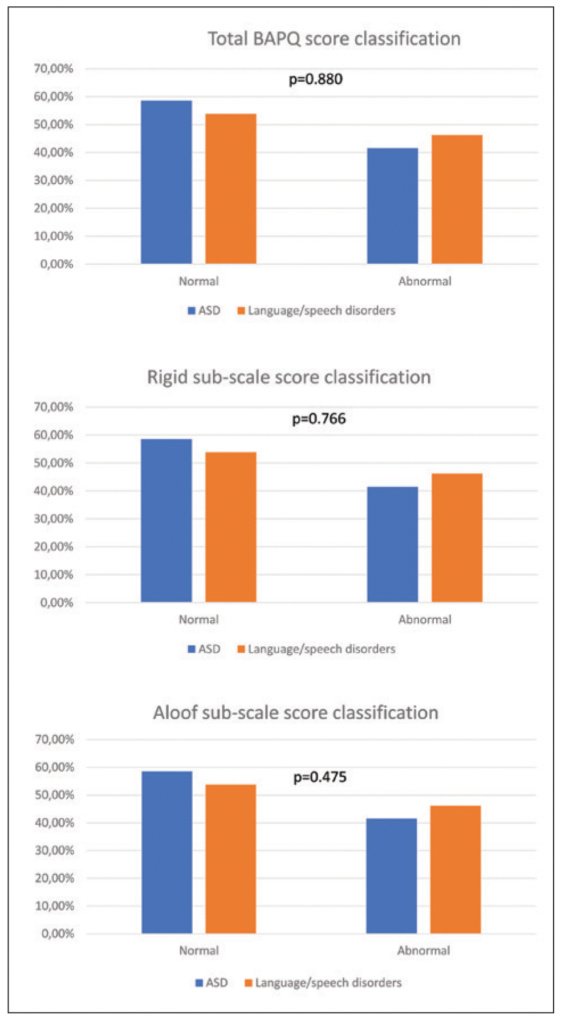
Figure 1. Comparison of the percentage of participants scoring above the clinical cut-off at the total BAPQ, aloof and rigid sub-scales between the two parental groups
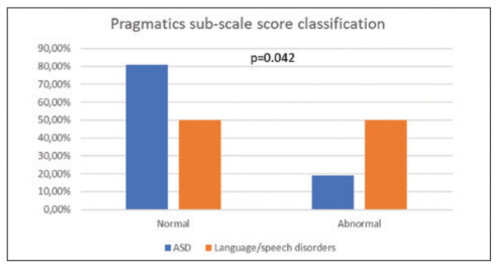
Figure 2. Comparison of the percentage of participants scoring above the clinical cut-off at the pragmatics sub-scale between the two parental groups.
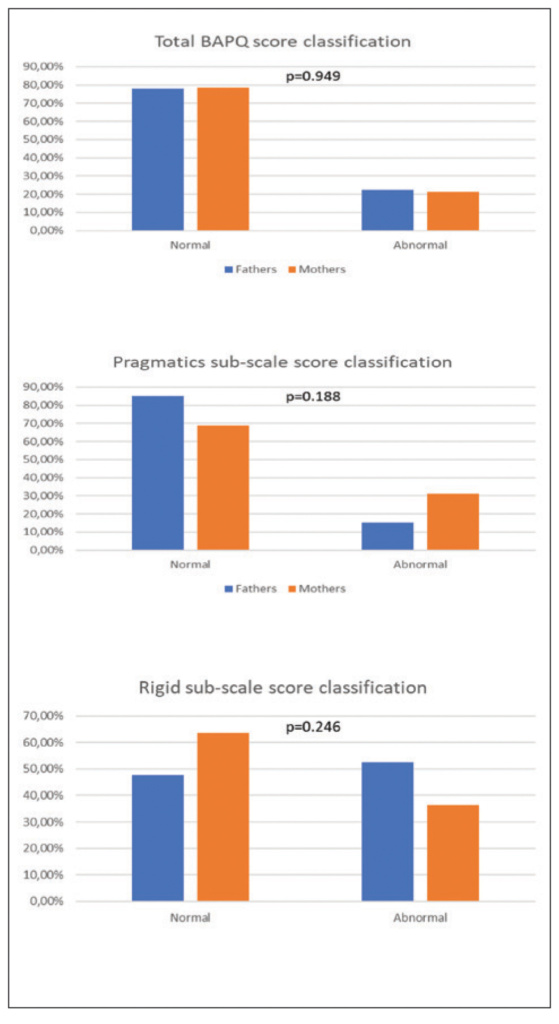
Figure 3. Comparison of the percentage of participants scoring above the clinical cut-off at the total BAPQ scale and the pragmatics and rigid sub-scales between mothers and fathers.
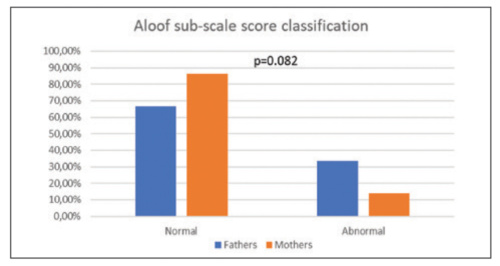
Figure 4. Comparison of the percentage of participants scoring above the clinical cut-off at the aloof sub-scale between mothers and fathers
Discussion
The present study’s findings suggest that over 20% of parents of children with developmental disorders exhibit clinically relevant characteristics of the broad autism phenotype. This finding corroborates existing literature given that several studies have shown that BAP traits can be detected at 14-23% of parents of children with ASD [5]. In addition, our analysis revealed that parents of ASD children reported similar levels of social difficulties and rigid personality compared to parents of children with developmental language and speech disorder, while the latter parental group exhibited greater impairment in pragmatic language skills. To our knowledge, most relevant studies focusing on the BAP, have compared parents of ASD children with parents either of typically developing children or of children with Down syndrome [5]. Only two studies have included a group of parents whose children had been diagnosed with specific language impairment. An earlier study [8] showed that parents of ASD children had better language skills compared to parents of children with specific language impairment, a finding which is in our accordance with the present study’s results. In contrast, another study reported that parents of ASD children demonstrate greater deficits in pragmatic language compared to parents of children with specific language impairment [9]. Research and clinical practice have shown that there may be significant overlap between ASD and developmental language disorders and that there are yet unspecified genetic and phenotypic associations between these two diagnostic categories [10,11]. Our findings provide support to the concept of a shared genetic background between ASD and language impairment and raise the question of whether pragmatic language deficits constitute part of the autism endophenotype or represent a broader developmental vulnerability. The associations between parental BAP traits and specific types of developmental delays are too far from being conclusive and further studies on the issue are warranted.
Moreover, the present analysis revealed that fathers of developmentally impaired children have the tendency to suffer from greater social difficulties compared to mothers, corroborating earlier findings regarding the presence of sexual bimorphism in BAP characteristics [12,13]. Baron-Cohen et al [12] formulated and empirically supported the extreme male brain theory in order to explain autism pathogenesis. There is evidence suggesting that fathers of ASD children are more socially aloof while mothers display more rigid personality characteristics [13]. In a similar vein, a recent study revealed that fathers of ASD children report higher scores in the aloof sub-scale of the BAPQ compared to mothers, while no other significant between-gender differences were observed [6].
The current findings should be treated with caution, taking into consideration certain limitations, namely the small study sample and the absence of informant-report data given that the BAPQ was not administered to spouses or partners.
In conclusion, the present investigation detected clinically relevant BAP characteristics in a significant proportion of parents with developmentally impaired children including ASD and language and speech impairment and provided useful information regarding BAP’s associations with the type of developmental delay and parental gender. Studying these distinctive behavioral traits may provide valuable information regarding the genetic background of developmental disorders and could also reveal parental behavioral and cognitive vulnerabilities which should be addressed through counseling and psychoeducation.
Conflict of interest disclosure
None declared
Declaration of funding sources
None declared
Author contributions
KK conceived the idea, designed the study and wrote the manuscript; PE recruited participants and administered the questionnaires, KS provided expert opinion and finally approved the article.
References
1. Jeste SS. Neurodevelopmental behavioral and cognitive disorders. Continuum (Minneap Minn) Behavioral Neurology and Neuropsychiatry. 2015; 21(3):690-714.
2. Hallmayer J, Cleveland S, Torres A, Phillips J, Cohen B, Torigoe T, et al. Genetic heritability and shared environmental factors among twin pairs with autism. Arch Gen Psychiatry. 2011;68(11):1095-102.
3. Ruparelia K, Manji K, Abubakar A, Newton CR. Investigating the Evidence of Behavioral, Cognitive, and Psychiatric Endophenotypes in Autism: A Systematic Review. Autism Res Treat. 2017;2017:6346912.
4. Gottesman I, Gould T. The endophenotype concept in psychiatry: Etymology and strategic intentions. Am J Psychiatry. 2003;160(4):636-45.
5. Cruz LP, Camargos-Junior W, Rocha FL. The broad autism phenotype in parents of individuals with autism: a systematic review of the literature. Trends Psychiatry Psychother. 2013;35(4):252-63.
6. Sasson NJ, Lam KS, Childress D, Parlier M, Daniels JL, Piven J. The broad autism phenotype questionnaire: prevalence and diagnostic classification. Autism Res. 2013;6(2):134-43.
7. Hurley RSE, Losh M, Parlier M, Reznick JS, Piven J. The broad autism phenotype questionnaire. J Autism Dev Disord. 2007;37(9):1679-90.
8. Lindgren KA, Folstein SE, Tomblin JB, Tager-Flusberg H. Language and reading abilities of children with autism spectrum disorders and specific language impair-ment and their first-degree relatives. Autism Res. 2009;2(1):22-38
9. Whitehouse AJ, Barry JG, Bishop DV. The broader language phenotype of autism: a comparison with specific language impairment. J Child Psychol Psychiatry. 2007;48:822-30.
10. Conti-Ramsden G, Simkin Z, Botting N. The prevalence of autistic spectrum dis-orders in adolescents with a history of specific language impairment (SLI). J Child Psychol Psychiatry. 2006;47:621–628.
11. Vernes SC, Newbury DF, Abrahams BS, Winchester L, Nicod J, Groszer M, et al. A functional genetic link between distinct developmental language disorders. N Engl J Med. 2008;359:2337–2345.
12. Baron-Cohen S1, Lombardo MV, Auyeung B, Ashwin E, Chakrabarti B, Knick-meyer R. Why are autism spectrum conditions more prevalent in males? PLoS Bi-ol. 2011;9:e1001081.
13. Seidman I, Yirmiya N, Milshtein S, Ebstein RP, Levi S. The Broad Autism Pheno-type Questionnaire: mothers versus fathers of children with an autism spectrum disorder. J Autism Dev Disord. 2012;42(5):837-46.